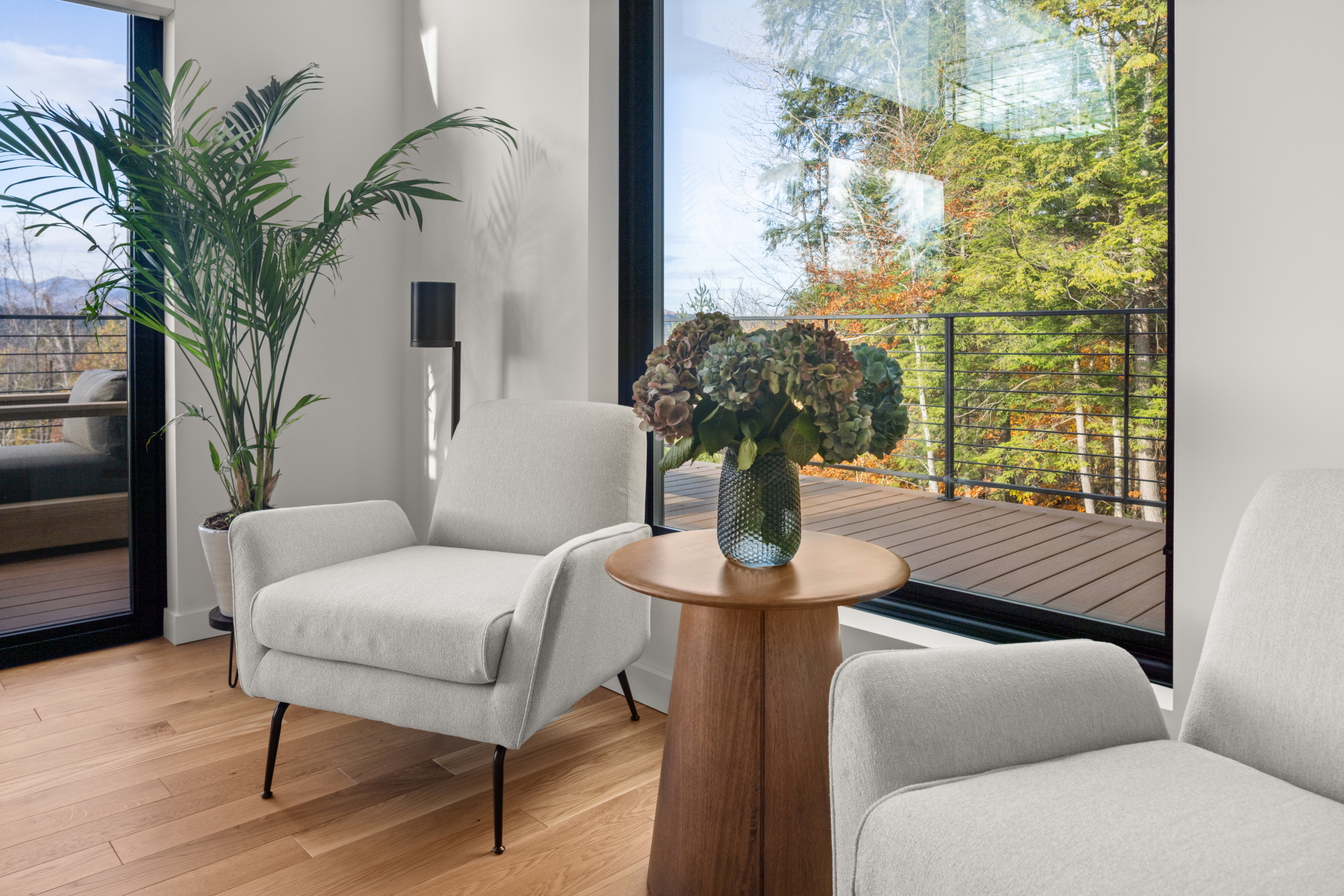
When imagining a custom home, it's natural to begin with the tangible: the number of bedrooms, the size of the kitchen, the amenities, and the overall square footage. These are important considerations, but they tell only part of the story.
What makes a home feel exceptional often has less to do with its size than with how its spaces are composed and experienced. Proportion, natural light, views, materials, and the relationships between rooms all contribute to an architectural experience that goes beyond the floor plan.
At Ebbrell Residential, we believe these qualities deserve as much attention as the spaces themselves.
The Importance of Proportion and Scale
A generous room isn't necessarily a well-proportioned room. The relationship between a space's width, length, and height can have a profound effect on how it feels.
Ceiling heights, window proportions, and the scale of architectural elements all influence our perception of space. A lower ceiling can create a sense of intimacy, while a taller volume can introduce openness and drama. Used together, these contrasts can make moving through a home a more engaging experience.
The goal isn't to make every room feel expansive. It's to establish a thoughtful balance between spaces that feel open and generous and those that offer comfort and enclosure.
Designing with Light and Views
Natural light is one of the most powerful elements in residential architecture. Its quality changes throughout the day and across the seasons, bringing movement and character to interior spaces.
Thoughtful window placement considers not only how much light enters a room, but where it comes from, how it moves through the space, and what it reveals.
Similarly, views are most compelling when they're considered as part of the architecture. A carefully positioned window can frame a particular landscape feature, establish a visual connection between inside and out, or create a moment of surprise as you move through the house.
Sometimes a single, well-placed opening can have a greater impact than an entire wall of glass.
The Relationships Between Spaces
A home is experienced as a sequence of spaces, not a collection of individual rooms.
How you arrive, what you see as you enter, and how spaces connect and unfold all contribute to the character of a home. Sightlines can draw the eye toward a view or architectural feature, while changes in ceiling height, light, or material can signal a transition from one space to another.
These relationships are particularly important in open-plan homes, where architectural elements and furniture arrangements help establish distinct areas without relying on walls.
Thoughtful spatial organization creates a sense of continuity while allowing individual rooms to retain their own character.
Materials, Details, and a Sense of Cohesion
The materials and details of a home contribute enormously to its atmosphere, but their impact comes from more than the quality of individual selections.
Natural wood, stone, metal, and other finishes each bring their own texture, color, and character. When used with intention, they establish relationships between spaces and reinforce the overall architectural concept.
Consistency doesn't mean repetition. A carefully developed material palette can allow for contrast, variation, and moments of individuality while maintaining a cohesive design language.
The same principle applies to architectural details, from the proportions of millwork and the integration of lighting to the transitions between materials. These decisions may be subtle individually, but together they contribute to a home that feels thoughtfully resolved.
Creating Something Greater Than the Sum of Its Parts
An exceptional home isn't defined by any single feature, material, or dramatic gesture. It's the result of many interconnected decisions working together.
A beautiful view is enhanced by the way it's framed. A generous room becomes more inviting through thoughtful proportions. Carefully selected materials gain meaning through their relationship to the architecture around them.
When these elements are considered together from the beginning, the result is more than a collection of beautiful spaces. It's a cohesive architectural experience, one that feels both distinctive and natural to inhabit.